As the global energy transition accelerates, alternative energy applications—including fuel cells, biofuels, and landfill gas recovery—are entering a phase of large-scale deployment, bringing mounting technical challenges for supporting heat exchange equipment. API Heat Transfer, a global provider of thermal exchange solutions, is delivering targeted, customized thermal management solutions for these sectors, leveraging its end-to-end in-house design and manufacturing capabilities spanning titanium, duplex stainless steel, Hastelloy®, Incoloy®, and other specialty alloys.
Conventional Heat Exchangers Struggle to Meet Alternative Energy Demands
Alternative energy applications typically involve extreme temperatures, highly corrosive media, and complex fluid chemistries. Conventional carbon steel, stainless steel, and copper alloy materials tend to degrade rapidly under such conditions, and off-the-shelf catalog products are seldom a direct fit.
"Alternative energy projects rarely conform to standard specifications," API Heat Transfer noted. "Whether it is the precision thermal control required by fuel cell stacks, the corrosive gas treatment in landfill gas applications, or the high-temperature reaction streams in biofuel processing—each project features unique flow rates, temperatures, pressures, and fluid characteristics. Customized development must begin right from the design stage."
Industry observers point out that as the energy transition moves from pilot demonstrations to large-scale rollout, heat exchange equipment—as a critical supporting component—will directly affect the overall economics and operational stability of alternative energy projects, making material compatibility and engineering reliability paramount.
Specialty Materials and Advanced Manufacturing Form Core Competitive Edge
API Heat Transfer maintains full in-house capabilities from material selection and engineering design through to fabrication, enabling the processing of multiple specialty alloys—including titanium, duplex stainless steel, Hastelloy®, and Incoloy®—within its own facilities. This capacity allows the company to deliver solutions optimized for performance and service life even when standard materials fall short.
The API's alternative energy portfolio currently spans several key directions:
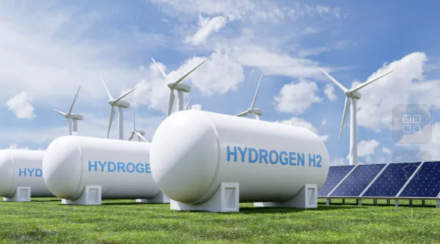
Alternative Energy Market Drives Heat Exchange Technology Evolution
Industry analysts note that the rapid growth of the alternative energy sector is creating an urgent need for technological upgrades in heat exchange equipment. Traditional heat exchanger manufacturers, constrained by material capabilities and engineering experience, often struggle to cope with such extreme operating conditions. Companies equipped with specialty material processing capabilities and customized engineering expertise are capturing an increasing share of opportunities in this niche market.
API Heat Transfer stated that it will continue to increase investment in the alternative energy sector, with a greater focus on serving fuel cells, hydrogen energy, biofuels, liquefied natural gas (LNG), and waste heat recovery, providing customers with one-stop thermal management support from solution design through equipment delivery.
For more details, please visit API Heat
Transfer website or contact us

Suzhou Factory:
No. 156 & No. 126, Qingqiu Street, 3rd District, Suzhou Industrial Park, Suzhou, Jiangsu, China
Tel.: +86.512.88168000 - 5424


Suzhou Factory:
No. 156 & No. 126, Qingqiu Street, 3rd District, Suzhou Industrial Park, Suzhou, Jiangsu, China
Tel.: +86.512.88168000 - 5424
Shanghai Office:
No. 1699, Gubei Road, Minhang District, Shanghai, China
Tel.: +86.21.5426.2525

 Suzhou:+86.512.8816.8000
  API.China@apiheattransfer.com